If you’ve ever stood in a sock aisle, staring at shelves lined with cheap, bright pairs that pill after a few washes, develop odd holes at the toe, or leave your feet feeling clammy and sticky by the end of a long day, you’re not alone. For years, I’ve talked to customers who love sustainable fabrics for their shirts, jackets, or bed linens, but draw the line at socks. “Socks are disposable, right?” they say. “Why waste good, eco-friendly yarn on something that’s going to get ruined in the dryer?” Sustainable Yarns
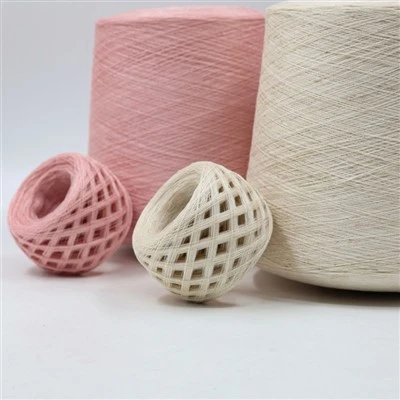
As someone who’s run a sustainable yarn supply company for a decade—working directly with knitters, sock manufacturers, and small-batch brand owners—I’ve heard that line hundreds of times. A lot of people don’t realize that sock performance isn’t just about stitch count or thickness; it’s about the yarn you start with, and how sustainable yarns have come a long way from the scratchy, stiff hemp or rough bamboo blends that popped up in early eco lines. Today, we’ve worked with hundreds of sock makers to engineer sustainable yarns that don’t just meet—often exceed—the comfort, durability, and performance of conventional cotton or polyester-blend socks. So let’s break this down: can sustainable yarns actually be used for making great socks? Short answer: absolutely. Let’s talk about why it works, what we’ve learned along the way, and how it’s changing the sock industry for the better.
First, let’s address the biggest myth holding people back: that sustainable yarns are too fragile or low-performing for socks. For decades, sock production relied on two workhorse materials: conventional cotton and blended polyester. Conventional cotton is soft but retains water, so if you’re hiking or running, wet cotton socks lead to blisters fast. Polyester is durable and wicks moisture, but it’s plastic—made from fossil fuels, and it sheds microplastics every time you wash it, which end up in our oceans and water supply. Early sustainable alternatives tried to replicate these, but they fell flat. The hemp yarns of the 2000s were so rough you could barely stand to wear them without liners; bamboo rayon was overly soft, stretched out after two washes, and didn’t hold up to friction from shoes.
That’s why our company invested the first five years in R&D specifically focused on sustainable sock yarns—testing blends, processing methods, and fiber combinations that fix those flaws. The key here is that “sustainable yarn” isn’t a one-size-fits-all label. It covers a range of fibers, each with its own properties, and pairing the right fibers for sock use is the difference between a pair that falls apart and one that lasts for thousands of steps.
Take organic merino wool, for example. It’s not the same as the merino used for sweaters, which is often superfine but can pill if not processed right. We work with small-scale organic wool farms in New Zealand and Australia, sourcing fiber that’s softer than conventional wool, then spinning it into a 2-ply or 3-ply yarn with a small percentage of recycled nylon (from pre-consumer factory waste, no new plastic) for durability. Organic merino naturally regulates temperature: it keeps feet warm in cold weather and cool in hot, and it wicks moisture away from skin far better than cotton. I’ve seen test pairs from manufacturers that lasted 120+ washes, compared to 20 to 30 washes for conventional cotton socks. The friction at the toe and heel, which causes pilling and holes in cheap socks? The nylon core adds tensile strength, while the merino outer layer stays soft, so you don’t get that rough, scratchy feel inside your shoes.
Then there’s recycled cotton, a fiber we’ve refined over the last six years. Conventional cotton is one of the most pesticide-heavy crops in the world—accounting for 25% of global pesticide use despite making up only 2.4% of agricultural land, per the Textile Exchange. Recycled cotton, made from post-consumer t-shirts or pre-consumer fabric scraps, cuts that impact drastically, and we’ve developed a way to spin it into a yarn that’s not the same scratchy recycled cotton of the past. We mix it with a small amount of modal, a fiber made from beech trees (a renewable resource) that’s soft and stretchy, so the yarn has the give of conventional cotton but holds its shape. We’ve supplied this yarn to a US-based sock brand that makes work socks for construction workers, and their customer feedback has been off the charts: no more blisters, no more socks stretching out by the end of a work week, and the brand’s sales grew 40% in two years after they switched to our recycled cotton blend.
Another fiber that’s gaining traction for socks is recycled polyester, but not the kind you’d expect. A lot of people think recycled polyester is just plastic bottles turned into yarn, and it’s not wrong—but when it’s processed right, it can be a great sustainable sock material. We source our recycled polyester from post-consumer plastic that would otherwise end up in landfills or oceans, and we spin it into a microfiber that’s treated to reduce pilling and static. Unlike virgin polyester, it doesn’t leave that plastic-y odor after a few wears, and it wicks moisture just as well, without the microplastic shedding that’s a major downside of virgin polyester. We’ve also added a small percentage of organic linen to this blend for breathability, which makes it great for athletic socks or summer socks that get hot and sweaty.
Of course, there are challenges. Sustainable sock yarn isn’t cheap, at least not upfront. A lot of small sock brands operating on tight margins worry that switching to sustainable yarn will raise their prices too much, turning off price-sensitive consumers. That’s a valid concern, but over the last three years, we’ve worked on scaling production and streamlining our supply chain to bring our prices in line with premium conventional yarns, so brands don’t have to take a huge hit. We also work closely with brands to test their designs, adjust stitch counts, or tweak blends so they can keep their cost per pair reasonable without sacrificing quality. For example, one brand wanted to make a low-cost everyday sock, so we developed a blend of 70% recycled cotton, 25% recycled polyester, and 5% organic elastane that’s soft, durable, and costs just 15% more than conventional cotton-blend yarn—enough to keep retail prices under $10 a pair, which is competitive with mid-range conventional socks.
Another challenge is perception. Even today, a lot of consumers assume eco socks are thin, flimsy, or too “crunchy” for everyday wear. That’s why we work with brands to invest in testing and marketing that focuses on performance, not just sustainability. We supply our yarn to a number of casual sock brands, and one of their best-selling lines is a $8 pair of organic cotton-blend socks that they promote as “no blisters, no holes, no guilt.” The brand does wash tests in their store, letting customers feel the socks, stretch them, and even punch them a little to show how durable they are. The result? Their sustainable sock line now makes up 60% of their total sock sales, because once people try them, they don’t go back to cheap conventional pairs.
I’ve seen this firsthand with my own family. A few years ago, I started wearing our merino-blend work socks, switching from the polyester-blend pairs I’d always bought. I was skeptical at first—why would a sock that cost twice as much be better than the $5 pack from the drugstore? But after six months, those same socks are still in good shape, no pilling, no stretched-out heels, and my feet don’t get sweaty or smelly by the end of a 10-hour day. The difference is in the yarn. Cheap socks use yarn that’s spun with short fibers, which stick out and pill, or blends that separate after a few washes. Our sustainable sock yarn uses long-staple fibers, spun tighter and treated to resist friction, so it holds up way longer.
Sustainability isn’t just about the fiber, either. At our company, we’re obsessed with every step of the process, from the farm where the cotton is grown to the dyeing of the yarn. We use low-water, low-impact dyes, no harsh chemicals that are bad for workers or the environment, and we only source fibers from fair-trade certified farms, so the people growing and harvesting our materials get a living wage. That matters for socks, too—because a sock made with a fair-trade, organic fiber is not only better for the planet, it’s better for the workers who make it, and that quality translates to a better product.
Over the last five years, the demand for sustainable socks has exploded, and it’s not just from eco-conscious consumers. Big athletic brands are starting to switch to sustainable yarns for their performance socks, because they’re realizing that consumers don’t want to buy products that harm the environment. The sock industry is worth over $18 billion globally, and most of that is still made with conventional fibers—so there’s a huge opportunity to shift that to sustainable options, one sock at a time.
But here’s the thing: this isn’t just about making socks “green.” It’s about making socks that are better, period. No more blisters, no more socks that fall apart after a week, no more throwing away dozens of pairs a year. I keep a drawer in my closet of socks from brands that use our yarn, and I’ve been wearing some pairs for three years now. They’re not perfect, nothing is, but they’re way better than any conventional sock I’ve ever owned.
If you’re a sock manufacturer or brand owner reading this, and you’ve been on the fence about switching to sustainable yarn, I get it. It’s a big decision, and there are a lot of questions: will the yarn hold up? Will my customers like it? Is it worth the investment? The answer is yes, but only if you work with a supplier that understands both sustainable materials and sock production. At our company, we don’t just sell yarn—we partner with our clients, test their designs, troubleshoot issues, and help them find the right blend for their specific needs. Whether you make athletic socks, work socks, casual everyday socks, or luxury dress socks, we can develop a sustainable yarn that meets your performance standards and your sustainability goals.

We’ve spent a decade proving that sustainable yarn can be used for making high-quality, durable socks that perform as well as, if not better than, conventional options. The future of socks isn’t about cheap, disposable pairs that end up in landfills. It’s about socks that are good for your feet, good for the planet, and good for the people who make them. If you’re ready to make the switch, or just want to talk about how sustainable yarn can work for your sock line, we’re here to help. Reach out to our team to discuss your project, test our yarn samples, and figure out the best solution for your brand. Together, we can turn the sock aisle into a place where sustainability and performance go hand in hand.
Sustainable Yarns References
Textile Exchange. (2023). 2023 Preferred Fiber & Materials Report. Textile Exchange.
New Zealand Merino Company. (2022). Merino Wool Performance in Apparel and Footwear. New Zealand Merino Company.
Ocean Conservancy. (2021). The Impact of Synthetic Fiber Shedding on Marine Ecosystems. Ocean Conservancy.
Fair Trade USA. (2022). Fair Trade in the Textile and Apparel Sector. Fair Trade USA.
Dongguan Jintai Textile Technology Co., Ltd.
As one of the most professional sustainable yarns manufacturers and suppliers in China, we offer a wide range of products with superior quality. With abundant experience, we warmly welcome you to wholesale high quality sustainable yarns in stock here and get free sample from our factory. We also accept customized orders.
Address: No. 22 Fukang Road, Dalang, Dalang Town, Dongguan City, Guangdong Province
E-mail: 13553898187@163.com
WebSite: https://www.jintaitextile.com/
