Hey there, let’s cut the crap (pun totally intended) and talk about two of the most common CNC processes our team gets hit with questions about all the time: CNC waterjet cutting and regular CNC machining. If you’re shopping around for parts or custom fabrications, you’ve definitely stared at these two terms and wondered which one’s actually right for your project—we get it, we answer this like 10 times a week, so let’s break it down like we’re chatting over a coffee, no boring jargon that makes your eyes glaze over. CNC Machining
First off, let’s set the scene: I’m Jake, operations lead at a mid-sized CNC machining shop (no need for the fancy corporate name, you already know who you’d be hooking up with if this fits) and we work on everything from tiny aerospace brackets to big metal farm parts. We don’t do waterjet cutting in-house—we send those jobs to a trusted local shop, but we’ve spent years collaborating with them, so I know exactly how both processes stack up, pros, cons, all the messy details. Let’s start with the basics of each, no fluff.
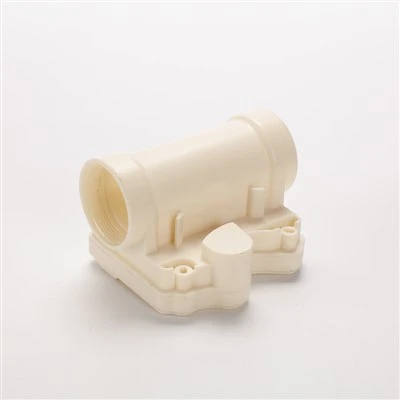
CNC machining is what most people picture when they hear “CNC work”—it’s subtractive manufacturing, right? A big, computer-controlled tool (think mills, lathes, maybe a 5-axis machine for the fancy stuff) spins a cutting tool at insane speeds, and it carves away excess material from a solid block or bar of whatever you’re using: aluminum, steel, plastic, even titanium. It’s like if you had a super precise, motorized chisel that follows a digital blueprint to make exactly the shape you want. When you get a custom CNC machined part, it’s basically shaped from scratch by removing material, layer by layer (or chip by chip, more like it—you’ll see shavings flying everywhere on the shop floor, that’s the good stuff).
CNC waterjet cutting, on the other hand? Also subtractive, but way different. Instead of a spinning tool, it uses a super high-pressure stream of water—like, imagine a hose so powerful it can cut through granite, but with extra grit if you need to cut metal. Wait, yeah, if you’re cutting anything hard like steel or stone, they mix in abrasive garnet (that’s a type of sand, basically) into the water stream. No spinning tools, no chips, just a focused jet of liquid doing all the work. It’s basically the industrial version of cutting paper with a pressure washer, but way more controlled.
Now, the real difference isn’t how they work—it’s what they’re good at, what they mess up, and when you should pick one over the other. Let’s dive into the key stuff you actually care about, because at the end of the day, the choice comes down to your material, your part, your budget, and your timeline.
First up: material compatibility. This is the big one, because both processes can’t handle the same materials, or handle them the same way. CNC machining loves materials that are solid and machinable—most metals (aluminum, steel, brass, copper), plastics (ABS, acrylic, Delrin), even some composites like carbon fiber (though you gotta use a sharp tool, or it’ll fray). The only materials CNC machining struggles with? Super soft, super stretchy stuff—like foam, thick rubber, or really thin plastic film. The spinning tool will just chew right through that, not make a clean cut. It also can’t do brittle materials like glass very well—too easy to chip or shatter when you’re carving it, since the tool applies pressure.
Waterjet? Dude, waterjet can cut almost anything, no joke. We’ve sent jobs to them for everything from stainless steel and granite to rubber, foam, even food stuff (they cut custom cake topper blanks sometimes, weird flex). They don’t care if it’s soft or brittle—because the jet is liquid, it doesn’t exert the same point pressure as a spinning tool. The only time waterjet falls flat is with super hard, ultra-thin materials, like thin titanium foil or really dense ceramics. Wait, also, waterjet leaves a little residue sometimes (garnet dust) so if you need a totally clean, food-safe cut, you might have to do extra cleaning.
Next: cut quality and precision. Let’s get specific here. CNC machining is like a tailor with a laser-measuring tape—we can hold super tight tolerances, like +/- 0.001 inches (that’s thinner than a human hair) no problem. If you need a part that has to fit perfectly into another part—like a bracket for a car engine, or a circuit board mount—CNC machining is your guy. The tool path is super precise, so you get crisp, square edges, sharp corners, and surfaces that are smooth enough that you barely have to sand them. We can do holes with perfect diameters, threads that line up exactly, all that good stuff. The only downside? Sometimes you get a little tool mark left on the surface, so if you need a super polished finish, we have to run it through a secondary process like sanding or powder coating.
Waterjet, on the other hand, has a looser tolerance—usually around +/- 0.003 to 0.005 inches, depending on the thickness of the material. That’s still precise enough for a lot of stuff, but if you need a part that has to fit with hair-level accuracy, you can’t use waterjet. Also, waterjet cuts have a slight “kerf” (that’s the width of the cut) and sometimes a little taper on the edges, especially if you’re cutting super thick material. Like, if you’re cutting a 2-inch thick steel plate, the top of the cut might be a tiny bit wider than the bottom, so you have to account for that in your design. No sharp corners either—since the jet is round, it leaves a small radius on inside corners, so if you need a 90-degree inside corner, waterjet can’t do that, you have to leave a little extra material and come back with a CNC mill to clean it up.
Then there’s heat—this is a huge one I can’t stress enough. CNC machining, when you’re cutting through metal, generates a ton of heat. The tool is spinning so fast, rubbing against the material, that the tip of the tool can get to 1000+ degrees, which can warp the material, cause micro-cracks, or mess up the temper of things like steel or titanium. For most jobs, we use coolant to cool it down, but even then, sometimes delicate parts get warped if they’re really thin. Also, if you’re working with heat-sensitive materials like some plastics or composites, the heat can melt, fray, or discolor them—you can see plastic parts with little burn marks from machining all the time.
Waterjet? Zero heat. Literally, because it’s just water and garnet. The stream is cold, so no thermal distortion, no warping, no melting, no discoloring. That’s why waterjet is perfect for thin, heat-sensitive stuff like carbon fiber composites or plastic sheets that would get destroyed by a hot milling tool. We’ve had jobs where a customer tried to machine a thin carbon fiber bracket, and it all melted and frayed, so we sent it to waterjet, and it came out perfect—no damage at all. That’s a game-changer for sensitive materials.
Now, production speed and cost—let’s get real, money talks here. If you need a single custom part, or a small run (like 1-10 parts), which is cheaper? It depends, but usually CNC machining is better. Wait, why? Because waterjet requires setup time for the machine, and even for small jobs, the per-part cost is higher than machining for thick, machinable metals. But if you need a big, thick part—like a 6-inch thick steel plate cut into a custom shape—waterjet is way cheaper. Because machining that would take hours and hours of cutting through thick metal, which uses a lot of tooling and time. Waterjet can cut that same plate in minutes, and the cost is way lower. Also, if you need a huge part—like a 10-foot long metal beam or a big sign—waterjet can handle way bigger sizes than most CNC mills, which have limited work envelopes. We had a customer last year who needed a 12-foot aluminum sign for a storefront—our mill could only do 8 feet max, so we sent it to waterjet, and it was done in a day.
But wait, if you need a high-volume run, like 1000 identical parts? CNC machining is way more efficient. Once you set up the tool path and the fixture to hold the parts, the mill can run non-stop, and each part costs less as you make more. Waterjet, while fast for big parts, is slower for high-volume small parts because you have to load and unload each piece, and the jet doesn’t move as fast as a mill for tiny, repeated cuts. We had a customer who needed 500 small aluminum brackets—machining cost him $2 per part, waterjet would’ve been $5 per part, so it was a no-brainer.
Also, waste material. Let’s talk scrap, because no one likes wasting money. CNC machining cuts from a solid block, so the only waste is the chips that come off—you can even recycle those metal chips for cash, which is a nice bonus. Waterjet, on the other hand, cuts through the entire material, so the waste is the actual part that’s removed, not just chips. If you’re cutting a big shape out of a sheet of steel, waterjet will use more of the sheet’s material as waste, whereas machining a part from a solid block will leave some excess, but less overall for small parts. Wait, no—wait, if you’re cutting multiple small parts from a single sheet, waterjet can nest them (arrange them to cut as closely as possible) to minimize waste, which is a plus. Machining small parts from a block would leave a lot more empty space in the block, so waste is higher. That’s another thing to consider.
Wait, let’s also address when you should never use one or the other. If you need tight tolerances (like +/- 0.001”) for a part that has to fit with other components—go CNC machining. If you need to cut heat-sensitive materials, thick stone, rubber, or foam—go waterjet. If you’re doing a high-volume run of small, precise metal parts—CNC machining all the way. If you’re doing a one-off big part or a material that can’t handle heat—waterjet is your call.
But here’s the thing: a lot of people try to pick one and use it for everything, and that’s where they mess up. We see it all the time—someone sends us a part that needs super tight tolerances, and they say “why not use waterjet to cut the blank, then finish it on the mill?” And that’s actually a great middle ground! We do that all the time for big parts: we send the rough blank to waterjet to get it close, then machine the edges and holes to get the tight tolerances. That way, you save money on the rough cut (waterjet is cheaper for big thick parts) and get the precision you need from the mill. It’s a hybrid approach that works way better than using either one alone for a lot of jobs.
Now, let’s talk from our perspective as a CNC machining shop—we don’t do waterjet, so we’re not biased (wait, no, we’re biased, but in your favor, not against the other process). We hate when customers come to us wanting a job done that’s way better suited for waterjet, because we don’t want to sell them something that’s not right. Like, last month, a guy came in wanting 10 small foam brackets for a custom packaging insert. He thought machining would be fine, but the mill would’ve chewed through the foam and left messy edges, and we would’ve had to sand every part for an hour. We told him to use waterjet, it would be clean and cheap, and he saved like $200 and got better parts. That’s way better than taking his money and giving him a bad part.
Another example: last week, a customer needed a custom titanium bracket for a drone. Titanium is super strong, but it’s also brittle, and machining it generates a ton of heat. If we’d machined it, we would’ve had to use a lot of coolant, and there was a risk of the bracket warping or cracking. Instead, we cut the rough blank with waterjet (no heat, so titanium stayed intact), then did the final precision machining on the mill to get the tight holes and edges. It came out perfect, no defects, and way faster than machining the whole thing from a solid block. That hybrid move is the secret that a lot of shops don’t tell you.
Let’s wrap this up with some quick takeaways so you don’t have to remember everything. First: CNC machining = subtractive, spinning tool, tight tolerances, no heat on sensitive materials, great for high-volume small precise metal parts. Waterjet = subtractive, high-pressure cold jet, versatile materials, no heat, great for big thick parts or sensitive materials, looser tolerances. Second: don’t use waterjet if you need hair-level precision, don’t use machining if your material can’t handle heat or is super soft. Third: hybrid works—rough cut with waterjet, finish with machining, saves money and gets the best of both worlds.
If you’re sitting there going, “okay, that’s cool, but which one do I need for my project?” don’t guess. Stop overthinking it, send us your blueprint (or even a rough sketch, we can work with that) and we’ll tell you exactly what’s best, no hidden fees, no jargon. We’ve worked with hundreds of customers, from hobbyists making a custom stand to big aerospace companies, and we’ve helped them pick the right process every time. No pressure, no sales pitch, just straight-up advice based on what works for your part.
Wait, quick last thought—people always ask me which process is “better.” The answer is: neither. They’re two different tools for two different jobs, like a hammer vs. a drill. You wouldn’t use a hammer to drill a hole, and you wouldn’t use a drill to drive a nail, and you shouldn’t use waterjet for a precision bracket or machining for a foam part. The best part is when you use them together to get the perfect result.
So if you’ve got a project cooking, hit us up. We’ll walk you through every step, no confusing quotes, no runaround. Just honest advice and work that actually fits what you need.
Robotic Machining References:
- Design for Manufacturability: How to Use Concurrent Engineering to Rapidly Develop Low-Cost, High-Quality Products, by George E. Dieter and Linda C. Schmidt
- Waterjet Cutting Technology: Principles and Applications, by Mohamed A. Hassan
- Handbook of CNC Machining, by Kevin A. Carlton and Ronald K. Sisson Jr.
Zhejiang Hayi Technology Co., Ltd.
With abundant experience, we are one of the most professional CNC machining manufacturers in China. We warmly welcome you to wholesale bulk CNC machining in stock here and get quotation from our factory. All customized products are with high quality and competitive price.
Address: Room 112, 1st Floor, No. 103, Siwangdai, Pingzhai Village, Renhe Subdistrict, Yuhang District, Hangzhou City, Zhejiang Province
E-mail: 18368133797@163.com
WebSite: https://www.zhejianghayi.com/
