If you’ve ever pulled a machine off the shelf, flipped on a pump, or spun a conveyor belt, the quiet workhorse making that motion smooth is almost certainly a deep groove ball bearing. As a supplier who’s spent 12 years sizing, selecting, and troubleshooting these parts for factories and repair shops alike, I get asked more than once: “What’s the coefficient of friction for a deep groove ball bearing?” It’s not a one-number answer, and that’s why so many folks get stuck when they’re trying to pick the right bearing for their application. Let’s break this down like I would with a new customer leaning over the workbench—no overly jargon-heavy stuff, just the real-world numbers and factors that matter. Deep Groove Ball Bearings
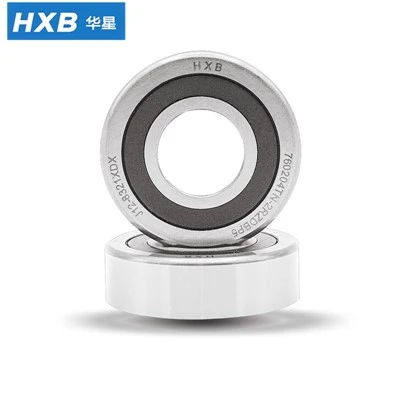
First, let’s start with the basics: the coefficient of friction (COF, usually written as µ) is a unitless number that describes how much force it takes to move two surfaces past each other. For plain metal sliders, µ might be 0.5 or higher, but deep groove ball bearings are a rolling element design, which is a whole different animal. Rolling friction is way lower than sliding friction because the balls roll, not scrape, between the inner and outer races. Most people expect it to be super low, but the truth is, it’s not fixed—it shifts based on five key factors: load, speed, lubrication, bearing size, and the condition of the parts.
Let’s talk about what actual numbers we see day to day. When a deep groove ball bearing is running under moderate load, properly lubricated, and spinning at a typical industrial speed (say, 500–2000 RPM), the dynamic coefficient of friction lands between 0.001 and 0.005. That’s 0.1% to 0.5% friction force—for every 100 pounds of load, you only need 0.1 to 0.5 pounds of force to keep the balls rolling. Compare that to a plain sleeve bearing, which might have a COF of 0.1 to 0.3 under the same load, and you can see why ball bearings are the go-to for reducing energy waste. The static COF (the force needed to get the bearing moving from a dead stop) is a little higher, usually 0.003 to 0.008, because the balls are sitting in the race grooves, and a tiny bit of initial adhesion between the metal surfaces has to break before rolling starts.
Now, why does this number jump around so much? Let’s start with load—this is the biggest factor. If you run a bearing under way too light a load, like a small 6205 bearing only holding a 5-pound part on a conveyor, the balls might start to skid instead of roll. That skidding makes friction spike, sometimes to 0.02 or higher, because it’s sliding now, not rolling. On the flip side, overloading a bearing (pushing more than its dynamic load rating) crushes the lubricant film between the balls and races, leading to metal-to-metal contact and COF that can go past 0.01. The sweet spot for most deep groove ball bearings is between 10% and 50% of their rated dynamic load; that’s where the COF stays right in that 0.001–0.005 range we talked about.
Speed is another big one, especially for high-RPM applications like electric motor spindles or small pumps. At very low speeds (under 100 RPM), the lubricant has time to thin or even seep out of the contact points, so static friction hangs around a bit. As speed picks up, hydrodynamic action (where the oil forms a pressurized film between metal surfaces) kicks in, reducing metal contact and dropping COF. But go past a bearing’s limit speed—too many RPM for its size and lubrication—and you get heat buildup, which breaks down lubricant, widens clearances between parts, and makes friction rise again. I remember a customer last year who installed 6204 bearings in a ventilation fan running at 18,000 RPM, way above their 12,000 RPM limit; their COF jumped to 0.012, and the bearings seized within three months. That’s exactly why matching speed to the bearing’s rating isn’t just for lifespan—it’s for friction too.
Lubrication is probably the thing I harp on most with customers, because it’s the easiest fix for high COF and low bearing life. If a bearing runs dry, or with too little grease or oil, the metal surfaces rub together, friction skyrockets, and wear happens fast. But too much lubrication can be just as bad: churning oil inside the bearing generates drag, adding to friction even if the rolling contact itself is low. The right amount is a thin film that separates the balls and races, about 1–2 microns thick, which is just enough to prevent metal contact without creating excess drag. For deep groove ball bearings, most industrial applications use lithium-based grease, and we recommend re-lubricating every 3–6 months for continuous runs—skipping that step is the number one cause of premature bearing failure and unexpected friction spikes.
Bearing size and design also play a role. Smaller deep groove ball bearings, like 608s used in skateboards or small electric tools, have higher relative friction than larger ones, because their contact areas between balls and races are smaller. That means a tiny bit of misalignment or a small amount of debris has a bigger impact on friction in a 608 than in a 6210 bearing, for example. Also, deep groove ball bearings have the ability to handle some axial load (push along the shaft) in addition to radial load, but if you load them more axially than radial, the contact angle between the balls and races changes, which can raise COF slightly—usually by 10–20% compared to pure radial load. That’s an important detail for customers who are using their bearings in applications with mixed loads, like a conveyor roller that has both radial load from the roller’s weight and axial load from side-to-side movement.
Let’s also talk about what not to use when calculating friction. A lot of guys come to me with the theoretical COF from textbook equations, but those are for ideal conditions. Textbook numbers might cite 0.001 for ball bearings, but that’s in a perfectly clean, perfectly aligned, perfectly lubricated lab test. In the real world, bearings sit on slightly misaligned shafts, they get a little dust or metal shavings in them, and they don’t get re-lubricated on schedule. Real-world operating COF is often 2–3 times higher than that ideal number, so if you’re designing a machine that needs to run efficiently, you have to account for that buffer. We always tell customers to use a nominal COF of 0.003 for moderate industrial applications; that’s a safe number that doesn’t under or overestimate friction costs.
I’ve seen so many production stops caused by misunderstood friction numbers. Last quarter, a food processing plant was having problems with their packaging line slowing down, blaming the motors, when it turned out the deep groove ball bearings on their conveyor rollers had a COF of 0.011 because they were running dry. A quick regreasing with the right grease brought the COF back down to 0.004, and the line speed went back to normal. On the other side, a customer who was designing a high-precision medical device tried to use a plain bushing because he thought ball bearings had too much friction, but we matched him to a 605 deep groove ball bearing with a polished race and low-friction grease, and his device now runs with the exact low friction he needed.
So, what does this all mean for you, whether you’re a maintenance tech, a design engineer, or someone sourcing bearings for a new build? The coefficient of friction of a deep groove ball bearing isn’t a fixed spec you pull off a datasheet—it’s a function of how you use it. If you keep it loaded in the sweet spot, lubricated on schedule, running within its speed limits, it will sit right in that 0.001–0.005 range. Mess up any of those factors, and that number can double or triple, leading to wasted energy, premature failure, or even equipment downtime.
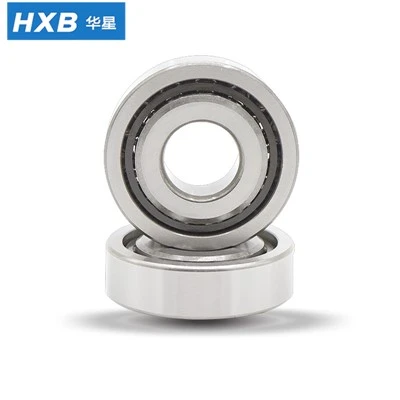
If you’re unsure what bearing you need for your application, or you’ve been dealing with high friction or short bearing life, we’re here to help. We can walk you through sizing, load calculations, lubrication recommendations, and anything else you need to make sure your deep groove ball bearings run smoothly and efficiently. Reach out to our team to discuss your specific project requirements and get tailored guidance for your bearing needs.
Electric Motor Bearings References
- Harris, T. A., & Kotzalas, M. N. (2006). Rolling Bearing Analysis (5th ed.). CRC Press.
- SKF Group. (2022). Deep Groove Ball Bearing Technical Manual.
- ISO 76:2019. Rolling Bearings – Dynamic Load Ratings and Rating Life. International Organization for Standardization.
- Zaretsky, E. V. (2000). Friction in Rolling Element Bearings. NASA Technical Memorandum.
- Timken Company. (2021). Bearing Friction and Lubrication Guide.
Hangzhou Huaxing Kechuang Holding Group Co., Ltd.
Hangzhou Huaxing Kechuang Holding Group Co., Ltd. is one of the leading manufacturers and suppliers of deep groove ball bearings in China, featured by quality products and good service. Please rest assured to buy bulk durable deep groove ball bearings from our factory. Welcome to view our website for more information.
Address: No.553 Yingbin Road, Linping, Hangzhou, 311100, China
E-mail: wmb@huaxingbearing.com
WebSite: https://www.hxbbearing.com/
