What is the difference between a 6 – axis and a 7 – axis welding robot?
As a supplier of welding robots, I’ve encountered numerous inquiries from clients about the disparities between 6 – axis and 7 – axis welding robots. This blog aims to provide a comprehensive understanding of these two types of robots, helping you make an informed decision when it comes to purchasing the right equipment for your welding needs. Welding Robot
6 – Axis Welding Robots
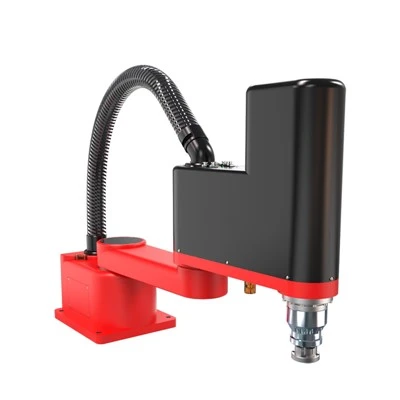
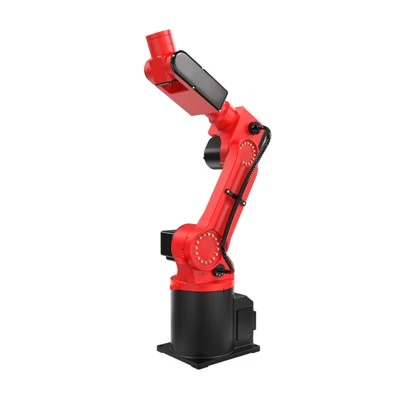
A 6 – axis welding robot is a staple in the welding industry, offering a high degree of flexibility and precision. The six axes of motion mimic the movements of a human arm, allowing the robot to reach and weld in various positions.
The first three axes, often referred to as the primary axes, control the position of the robot’s base, shoulder, and elbow. These axes enable the robot to move the welding torch to different locations in the workspace. The base axis rotates the entire robot around a vertical axis, while the shoulder and elbow axes allow for up – and – down and side – to – side movements.
The last three axes, known as the secondary axes, control the orientation of the welding torch. The wrist roll axis rotates the torch around its own axis, the wrist pitch axis tilts the torch up or down, and the wrist yaw axis turns the torch left or right. This combination of axes provides a wide range of motion, allowing the robot to weld complex shapes and contours.
One of the key advantages of a 6 – axis welding robot is its relatively simple programming and operation. The six – axis configuration follows a well – understood kinematic model, making it easier for operators to program the robot to perform specific welding tasks. Additionally, 6 – axis robots are generally more affordable than their 7 – axis counterparts, making them a popular choice for small and medium – sized enterprises.
However, 6 – axis welding robots do have some limitations. They may have difficulty accessing certain tight or obstructed areas, especially when the workpiece has complex geometries. The range of motion can be restricted when the robot needs to reach around or over obstacles, which can lead to inefficiencies in the welding process.
7 – Axis Welding Robots
A 7 – axis welding robot takes the concept of flexibility to the next level by adding an additional axis of motion. The seventh axis is typically a linear track that allows the robot to move along a fixed path. This additional axis provides a significant advantage in terms of reach and accessibility.
With the seventh axis, the robot can cover a larger workspace. It can move along the linear track to reach remote areas of the workpiece, eliminating the need to reposition the workpiece or the robot. This is particularly useful in applications where the workpieces are large or have extended dimensions, such as in the automotive and aerospace industries.
Another benefit of the 7 – axis welding robot is its ability to better adapt to complex workpieces with multiple features. When combined with the six axes of the robot arm, the seventh axis allows the robot to approach the workpiece from more angles, reducing the need for complex fixturing. This can lead to a more efficient and accurate welding process, as the robot can always find the optimal position and angle for welding.
However, 7 – axis welding robots are more complex and expensive than 6 – axis robots. The additional axis requires more sophisticated programming and control systems. Operators need to have a higher level of technical expertise to program and operate the robot effectively. Moreover, the maintenance and upkeep of a 7 – axis robot are also more challenging and costly due to the additional components and moving parts.
Comparison in Welding Applications
In terms of welding applications, the choice between a 6 – axis and a 7 – axis robot depends on the specific requirements of the project.
For simple welding tasks on small to medium – sized workpieces, a 6 – axis robot is often sufficient. For example, in the manufacturing of furniture frames or small metal components, a 6 – axis robot can provide accurate and efficient welding. The relatively low cost and ease of programming make it an attractive option for these types of applications.
On the other hand, 7 – axis robots are better suited for complex and large – scale welding projects. In the automotive industry, where car bodies have complex shapes and large dimensions, 7 – axis robots can reach all the necessary welding points without the need for excessive repositioning. They can also be used in the construction of large structures, such as bridges or industrial equipment, where the ability to cover a large workspace is crucial.
Considerations for Purchasing
When deciding whether to purchase a 6 – axis or a 7 – axis welding robot, several factors need to be taken into account.
Budget is an important consideration. As mentioned earlier, 6 – axis robots are generally more affordable. If you have a limited budget and your welding needs are relatively simple, a 6 – axis robot may be the best choice. However, if you have the financial resources and your projects require high – level flexibility and reach, a 7 – axis robot may be worth the investment.
Workspace is another crucial factor. If your workshop has limited space, a 6 – axis robot may be more suitable as it takes up less room. But if you have a large workspace and need to cover a wide area for welding, a 7 – axis robot with its extended reach can be a better option.
The complexity of your welding tasks also plays a significant role. If your workpieces have simple geometries and the welding operations are straightforward, a 6 – axis robot can handle the job. However, if you are dealing with complex shapes, multiple welding angles, and large workpieces, a 7 – axis robot is likely to provide better results.
Conclusion
In conclusion, both 6 – axis and 7 – axis welding robots have their own unique advantages and limitations. A 6 – axis robot offers simplicity, affordability, and ease of use, making it a great choice for simple welding tasks. On the other hand, a 7 – axis robot provides enhanced flexibility, reach, and adaptability, but at a higher cost and with more complex operation requirements.
As a welding robot supplier, I understand that choosing the right robot for your business is a critical decision that can impact your productivity and profitability. Whether you are a small – scale manufacturer or a large – scale industrial enterprise, I am here to help you find the perfect welding robot solution.
Industrial Robot If you are interested in learning more about our 6 – axis and 7 – axis welding robots, or if you want to discuss your specific welding needs and how our products can meet them, please don’t hesitate to contact us. Our team of experts is ready to provide you with detailed information and technical support to ensure that you make the best choice for your business.
References
- Groover, M. P. (2016). Automation, Production Systems, and Computer – Integrated Manufacturing. Pearson.
- Altintas, Y., Brecher, C., Weck, M., & Wright, P. K. (2007). Chatter in machining processes: a review. CIRP Annals – Manufacturing Technology, 56(2), 712 – 731.
- Huang, H., & Wang, J. (2019). Research on the motion control system of 7 – axis welding robot. International Journal of Advanced Robotic Systems, 16(1), 1 – 8.
Robotic Technology (GD) Co., Ltd.
Robotic Technology (GD) Co., Ltd. is one of the most experienced welding robot manufacturers and suppliers in China, also supports custom service and one year warranty. Please feel free to wholesale CE approved welding robot for sale here from our factory. Contact us for quotation.
Address: Room 102, No. 30,Hengfeng 2nd Road,Daguo, Changping Town, Dongguan City,Guangdong,China
E-mail: admin@iroboticplus.com
WebSite: https://www.rb-tic.com/
