As a supplier of Veress needles, I’ve been deeply involved in the medical field, witnessing the crucial role these instruments play in laparoscopic surgeries. One question that frequently arises, both from medical professionals and those interested in the technology, is about the probability of internal organ damage when using a Veress needle. In this blog, I’ll delve into this topic, exploring the factors that influence the risk and providing insights into how we, as a supplier, contribute to minimizing this risk. Veress Needle
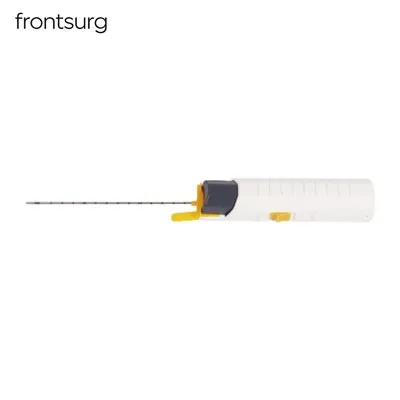
Understanding the Veress Needle
The Veress needle is a fundamental tool in laparoscopic procedures. Introduced by János Veress in the 1930s, it is used primarily to create a pneumoperitoneum, which is the inflation of the abdominal cavity with carbon dioxide gas. This inflation creates space for the laparoscope and other surgical instruments, allowing the surgeon to visualize and operate on the internal organs more effectively.
The needle has a unique design. It consists of an outer cannula and an inner spring-loaded trocar with a blunt tip. When the needle is inserted into the abdominal cavity, the trocar retracts upon contact with tissue, protecting the organs from direct puncture. Once the needle reaches the peritoneal cavity, the trocar extends, and gas can be insufflated.
Factors Affecting the Probability of Internal Organ Damage
The probability of internal organ damage when using a Veress needle is influenced by several factors, which can be broadly categorized into patient – related factors, surgeon – related factors, and needle – related factors.
Patient – Related Factors
- Obesity: Obese patients present a greater challenge. The increased thickness of the abdominal wall can make it more difficult to accurately judge the depth of needle insertion. Fatty tissue may also obscure the normal anatomical landmarks, leading to a higher risk of misplacement. Studies have shown that the risk of organ damage in obese patients can be up to two – to three – fold higher compared to non – obese patients.
- Previous abdominal surgeries: Scar tissue from previous surgeries can distort the normal anatomy of the abdominal cavity. The adhesions formed as a result can cause organs to be displaced from their typical positions. When inserting a Veress needle, the surgeon may inadvertently puncture an organ that has moved due to these adhesions.
Surgeon – Related Factors
- Experience: A surgeon’s level of experience is a critical factor. Inexperienced surgeons may have difficulty in accurately assessing the resistance during needle insertion, which can lead to over – penetration or misdirection of the needle. Seasoned surgeons, on the other hand, are more adept at recognizing the subtle changes in resistance and can adjust their technique accordingly.
- Technique: The technique used for needle insertion also plays a significant role. The proper technique involves inserting the needle at the correct angle and using a controlled, gentle force. If the needle is inserted too forcefully or at an incorrect angle, the risk of organ damage increases.
Needle – Related Factors
- Design and quality: The design of the Veress needle can impact the risk of organ damage. A well – designed needle with a reliable spring – loaded trocar mechanism is less likely to cause injury. At our company, we invest heavily in research and development to ensure that our Veress needles have the most advanced and reliable designs. The quality of the materials used in the manufacturing process also matters. High – quality materials ensure the durability and proper functioning of the needle, reducing the risk of malfunction and subsequent organ damage.
- Size: The size of the Veress needle can influence the probability of damage. Larger – gauge needles may cause more significant trauma if they do penetrate an organ. However, smaller – gauge needles may be more prone to clogging, which can affect the insufflation process. Surgeons need to carefully select the appropriate needle size based on the patient’s characteristics and the specific surgical requirements.
Estimating the Probability
Estimating the exact probability of internal organ damage when using a Veress needle is challenging due to the variability of the factors mentioned above. However, numerous studies have been conducted to provide some insights.
Overall, the reported incidence of internal organ damage during Veress needle insertion ranges from 0.02% to 0.2%. This relatively low incidence rate indicates that, when used correctly, Veress needles are a safe and effective tool. However, it’s important to note that even a small probability of organ damage can have serious consequences for the patient.
Minimizing the Risk
As a Veress needle supplier, we are committed to helping minimize the risk of internal organ damage. Here’s how:
Product Innovation
We continuously work on improving the design of our Veress needles. Our research team is constantly exploring new materials and mechanisms to enhance the safety and functionality of the needles. For example, we are developing needles with improved trocar retraction systems that provide more reliable protection during insertion.
Quality Assurance
We have a rigorous quality assurance process in place. Every Veress needle undergoes multiple inspections and tests before it leaves our facility. We ensure that the needles meet the highest international standards for quality and safety. This commitment to quality gives surgeons the confidence that they are using a reliable product.
Training and Education
We also support training and education initiatives for medical professionals. We believe that well – trained surgeons are more likely to use our Veress needles safely and effectively. We provide resources such as instructional videos, product manuals, and in – person training sessions to help surgeons learn the proper techniques for needle insertion.
Conclusion
The probability of internal organ damage when using a Veress needle is influenced by a complex interplay of patient – related, surgeon – related, and needle – related factors. While the overall risk is relatively low, it is essential to take all possible measures to minimize it.
As a supplier, we are at the forefront of this effort. Our commitment to product innovation, quality assurance, and education is aimed at providing surgeons with the best possible tools and support to ensure patient safety during laparoscopic procedures.
Titanium Clip If you are a medical professional or a healthcare provider interested in learning more about our Veress needles, or if you are considering a purchase, we would be delighted to engage in a discussion. Contact us to start a conversation about how our high – quality Veress needles can meet your needs and contribute to the success and safety of your laparoscopic surgeries.
References
- Nezhat C, Nezhat F, Nezhat C. Atlas of Operative Gynecologic Laparoscopy. McGraw – Hill Education; 2019.
- Collins J, et al. Handbook of Laparoscopic Surgery. Springer; 2020.
- Multiple peer – reviewed medical journal articles on laparoscopic surgery and Veress needle use.
Frontmed (Hangzhou) Trading Co., Ltd.
Frontmed (Hangzhou) Trading Co., Ltd. is one of the most experienced veress needle manufacturers and suppliers in China, also supports custom service. Please rest assured to wholesale high quality veress needle made in China here from our factory. Contact us for more details.
Address: Room 406, Building 6, No.1688 Chunjiang East Rd, Tonglu, 311500, Hangzhou
E-mail: alex@frontsurg.com
WebSite: https://www.frontsurg.com/
