Hey there! I’m a supplier of conductive polymers, and I’ve been in this game for quite a while. Conductive polymers are pretty cool materials, and they’ve got a wide range of applications, from electronics to energy storage. But one thing that always fascinates me is how they behave under different environmental conditions. So, in this blog post, I’m gonna share some of my insights on this topic. Conductive Polymer
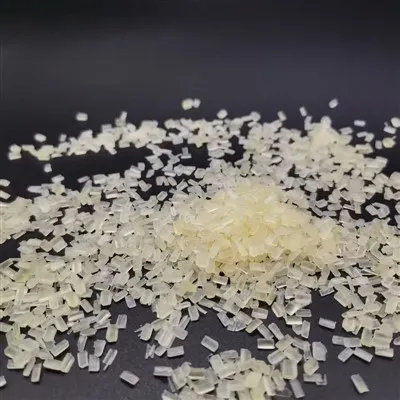
First off, let’s talk about what conductive polymers are. They’re basically polymers that can conduct electricity. Unlike traditional metals, which conduct electricity through the movement of free electrons, conductive polymers conduct electricity through the movement of charge carriers, such as electrons or holes, along the polymer chain. This makes them lightweight, flexible, and easy to process, which is why they’re so popular in many industries.
Now, let’s get into how conductive polymers behave under different environmental conditions. One of the most important factors that can affect the conductivity of conductive polymers is temperature. Generally speaking, the conductivity of conductive polymers decreases as the temperature increases. This is because at higher temperatures, the polymer chains become more disordered, which makes it harder for the charge carriers to move along the chain. However, some conductive polymers, such as polyaniline, can actually increase their conductivity at higher temperatures due to a phenomenon called "doping." Doping involves adding small amounts of other materials to the polymer to increase its conductivity.
Another important factor that can affect the conductivity of conductive polymers is humidity. When conductive polymers are exposed to high humidity, they can absorb water molecules, which can increase their conductivity. This is because water molecules can act as charge carriers, which can help to facilitate the movement of electrons along the polymer chain. However, if the humidity is too high, the water molecules can also cause the polymer to swell, which can disrupt the polymer chain and decrease its conductivity.
In addition to temperature and humidity, other environmental factors, such as light, oxygen, and chemicals, can also affect the conductivity of conductive polymers. For example, exposure to light can cause some conductive polymers to degrade, which can decrease their conductivity. Oxygen can also react with some conductive polymers, which can cause them to oxidize and lose their conductivity. And exposure to certain chemicals, such as acids or bases, can also affect the conductivity of conductive polymers by either doping or de-doping the polymer.
So, why is it important to understand how conductive polymers behave under different environmental conditions? Well, for one thing, it can help us to design better materials for specific applications. For example, if we know that a conductive polymer is going to be used in a high-temperature environment, we can design the polymer to have a higher thermal stability so that it can maintain its conductivity at high temperatures. Similarly, if we know that a conductive polymer is going to be used in a humid environment, we can design the polymer to be more resistant to water absorption so that it can maintain its conductivity even in the presence of moisture.
Another reason why it’s important to understand how conductive polymers behave under different environmental conditions is that it can help us to optimize the performance of our products. For example, if we know that a conductive polymer is going to be used in a particular application, we can test the polymer under different environmental conditions to see how it performs. This can help us to identify any potential problems or limitations with the polymer and to make any necessary adjustments to improve its performance.
As a supplier of conductive polymers, I’m always looking for ways to improve the performance of our products. That’s why we invest a lot of time and resources in research and development to understand how conductive polymers behave under different environmental conditions. We also work closely with our customers to understand their specific needs and to develop customized solutions that meet their requirements.
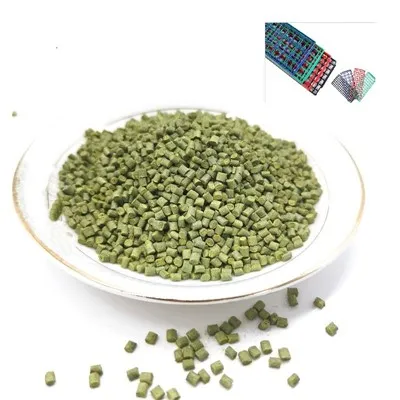
If you’re interested in learning more about conductive polymers or if you’re looking for a reliable supplier of high-quality conductive polymers, please don’t hesitate to contact us. We’d be happy to discuss your needs and to provide you with more information about our products and services.
Antistatic Additives References:
- "Conductive Polymers: Fundamentals and Applications" by A. G. MacDiarmid, J. C. Chiang, and A. J. Heeger
- "Handbook of Conductive Polymers" edited by T. A. Skotheim, R. L. Elsenbaumer, and J. R. Reynolds
- "Conductive Polymers: Synthesis, Properties, and Applications" by S. K. De and A. K. Nandi
Jiangxi Sugo Advanced Materials Co., Ltd.
With abundant experience, we are one of the most professional conductive polymer manufacturers in China. Please feel free to buy high quality conductive polymer in stock here and get free sample from our factory. We also accept customized orders.
Address: 1st Fugong Rd, Futian Industrial Park, Dingnan, Ganzhou City, Jiangxi Prov., R.P.C 341900
E-mail: EILEEN@SUGOPLAS.COM
WebSite: https://www.sugo-esd.com/
