Hey there, fellow gearheads, aspiring motorcycle builders, and supply chain folks! I’m the owner of a small die casting mold shop that’s been cranking out custom molds for motorcycle parts for almost 12 years now. Every single week, I get at least one message that goes something like this: “Hey, I need a mold for a new motorcycle engine cover or a swing arm bracket—how much is that gonna cost me?” Motorcycle Parts Die Casting Mold
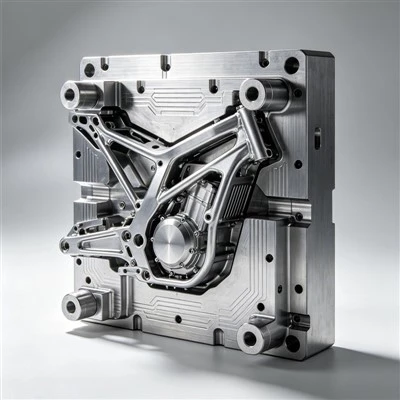
I get it, right? When you’re launching a new bike line, replacing worn factory molds, or scaling up production, the last thing you want is sticker shock or hidden fees that pop up halfway through the project. A lot of people think all die casting molds are the same, but trust me, it’s not like buying a off-the-shelf tire for a Honda or a Harley. Those molds are custom, precision tools that make everything from tiny clutch levers to big, high-stakes engine casings. So let’s break this down like we’re sipping coffee in my shop at 7 a.m., no fancy jargon, no BS.
First off, let’s get one thing straight: there’s no one-size-fits-all price tag. If I told you every motorcycle parts die casting mold costs $5,000, that’d be a lie—and if you paid that, you’d probably end up with a mold that cracks after 1,000 shots, not the 50,000+ you need for mass production. The price depends on a handful of big factors, and I’ve seen people blow their budgets because they skipped asking about these. Let’s run through them one by one.
Number one: what part are you actually making? Tiny, simple parts are way cheaper than big, complex ones. Let’s say you need a mold for a clutch lever— that’s a small, relatively flat piece with a couple of holes, right? It’s not super intricate, so the mold takes less time to machine, uses less material, and costs less. But if you need a mold for a full motorcycle engine crankcase? That’s a big, irregular shape with cooling channels, multiple cavities, and tight tolerances that can’t be off by even a hair. I’m talking about a part that holds all the moving parts of your bike together, so if the mold’s even a little wrong, the engine seizes up. That mold’s gonna cost way more. I had a client last year who wanted a mold for a rear brake caliper body—small, but it has a bunch of internal passages for brake fluid, so that added complexity pushed the cost up almost 30% compared to a simple lever mold.
Number two: how many parts do you need the mold to make (that’s called “shot count” in the biz). If you’re a small custom shop making 100 motorcycles a year, you don’t need a mold that lasts 100,000 shots. Those high-shot molds use way better steel—like H13 tool steel, which is tough, heat-resistant, and can stand up to the repeated pounding of molten aluminum (most motorcycle parts are aluminum, by the way, some are magnesium for racing) being forced into them. But for a small batch, you can use a lower-grade steel, like P20, which is easier to machine and cheaper, even if it only lasts 15,000 shots. Last quarter, I quoted a custom shop a $3,800 mold for a set of handlebar clamps that they only needed for their limited-edition run, versus another big production client who paid $12,000 for an engine case mold that’s supposed to last 75,000 shots. The difference is night and day, and I’d never sell a high-shot mold to someone who only needs 500 parts—they’re wasting money, and I’d rather be honest about that.
Number three: how many cavities do you want in the mold? A cavity is just the space in the mold that makes one part. If you need a mold that makes one swing arm bracket at a time, that’s a single-cavity mold. But if you need 200 clutch levers a week, a dual-cavity mold that makes two levers per shot would cut your production time in half. More cavities mean more material, more machining, more precision, so that’s gonna jack up the price. For example, a single-cavity lever mold is around $3,000, while a four-cavity mold for the same lever is closer to $5,500. The tradeoff is faster production, so it’s worth it if you’re scaling, but not so much if you’re small batch.
Number four: tolerance and surface finish. Motorcyclists are finicky people—they want parts that fit perfectly, look good, and don’t have those little lines where the mold halves meet. Tolerance is how precise the part has to be. A clutch lever needs to fit exactly in the handlebar, so it has to be within a few thousandths of an inch. A racing engine part needs even tighter tolerances. Surface finish matters too—if you’re making a part that’s going to be polished and anodized, the mold has to have a super smooth surface, which means more polishing time for us. Last month, I had a client who wanted a engine cover mold with a mirror-like surface because he was showing his bike at Sturgis, so that added $1,800 to the mold cost. If he’d just wanted a plain, functional part, that extra polish wouldn’t have been necessary.
Okay, so now that we’ve covered the big factors, let’s give you actual numbers, no guesswork. Let’s break it down by common motorcycle parts:
- Small, simple parts (clutch levers, foot pegs, small brackets, bolts): Single-cavity, 15k-50k shot count, P20 steel, basic finish. Price range: $2,500 to $5,000. That’s the sweet spot for most custom shops or small production runs.
- Medium parts (engine side covers, brake caliper bodies, handlebar risers): Single or dual cavity, 50k-75k shot count, H13 steel, decent finish. Price range: $5,000 to $12,000. This is where most mid-sized bike lines fall.
- Large, complex parts (engine crankcases, swing arms, cylinder heads): Single cavity, 75k-100k shot count, premium H13 or even stainless steel, tight tolerances, custom surface finish. Price range: $12,000 to $30,000+. I once quoted a client a $35,000 mold for a complete motorcycle frame half— that’s a huge, intricate part with tons of welding points and structural requirements.
Wait, but hold on—there are extra costs that people forget about, and those are the ones that make the price feel way higher than expected. First, design time. I don’t just take a part drawing and start machining. We work with you to adjust the part for die casting—because not every shape is easy to cast. For example, if you have a part with a sharp internal corner, that’ll create stress in the mold and break it. So we’ll tweak the design to add a radius, which makes the mold last longer. That design time? It’s usually included in the quote for smaller parts, but for big complex parts, it can add $1,000 to $3,000 if you need multiple design revisions.
Then there’s mold testing, or tryout. Once we machine the mold, we have to test it to make sure it works, fix any small issues (like air pockets that cause porosity in the part, or misalignment in the cavities). That tryout time isn’t free—for a big engine case mold, that can take 2-3 days of running molten metal, adjusting the machine, trimming excess material, so that adds another $1,500 to $4,000. A lot of shops try to skip this to save money, but trust me, that’s a recipe for bad parts and expensive reworks later.
And don’t forget about maintenance and modifications. Molds need upkeep—polishing, repairing small cracks, replacing worn parts. If you want to modify a mold later (like changing a bracket’s shape to fit a new bike model), that’ll add cost too. Some suppliers charge extra for maintenance, but I include a free first minor polishing in the first 6 months if you buy from me, because I want repeat business, not one-off jobs.
Now, let’s talk about common mistakes people make when shopping for these molds. I’ve seen it a hundred times. First, going for the cheapest quote you can find. There are shops overseas that will quote you a $1,500 clutch lever mold. But guess what? That mold’s gonna use cheap steel, have loose tolerances, and last maybe 2,000 shots. You’ll end up having to replace it in 3 months, which is way more expensive in the long run. I’ve had clients come to me after buying a cheap mold overseas that cracked on their first big production run, costing them thousands in lost parts and downtime.
Second, not being clear about your shot count needs. If you tell a supplier you need 1,000 parts, but they quote you a 100,000 shot mold, they’re gonna mark up the steel price for that high durability, even though you don’t need it. Be honest about how many parts you actually plan to make— that’s how you get a fair quote.
Third, ignoring surface finish and tolerance requirements. If you’re making a street bike part that needs to fit perfectly, don’t ask for a “basic” mold and then complain when the parts don’t line up. Be upfront about whether you’re showing the bike, racing it, or just commuting— that changes the specs, and the price.
Wait, let’s also talk about lead times, because that’s tied to cost too. If you need a mold in 2 weeks instead of 6 weeks, that’s rush fees. Machinists work on schedules, so jumping the line adds 20-30% to the total cost. Most of my standard molds take 4-6 weeks, and I don’t do rush jobs unless it’s an emergency, because I don’t want to cut corners on quality.
So, if you’re reading this and you’re thinking, “Okay, I need a mold for my next part, how do I get a real quote?” Let me give you my process, because it’s the same for every client, and it’s why my customers come back. First, have a clear part drawing or 3D model (even a rough sketch works, we can refine it). Second, tell me how many parts you need, what kind of bike it’s for, and if it’s for production, custom, or a one-off prototype. Third, tell me any specific requirements—like surface finish, tolerance, or if it needs to work with your existing casting machine.
I don’t do vague quotes. If you send me a blurry photo of a lever and say “how much?” I can’t give you a real number. But if you send me a 3D step file of a rear brake caliper, tell me you need 50,000 parts, and it needs to be anodized black, I can give you a firm price within 24 hours, no hidden fees.
At the end of the day, a motorcycle parts die casting mold isn’t just a hunk of metal with a cavity in it. It’s the foundation of your product. Cut corners here, and you’ll pay for it in bad parts, downtime, and lost customers. I’ve been doing this long enough to know that a fair price, good communication, and a mold that works when it’s supposed to is way better than the cheapest quote out there.

If you’re ready to talk about your next mold project, whether it’s a tiny custom lever or a big engine case, hit me up. I’ll walk you through every step, answer all your dumb (or smart) questions, and give you a quote that makes sense for your budget and your needs. No pressure, no sales pitch, just real talk about real molds for real motorcycle parts.
Construction Hardware Die Casting Mold References:
- Die Casting Tooling Cost Estimation Guidelines, American Die Casting Association, 2021
- Tool Steel Selection for Die Casting Molds, Metals Handbook, 11th Edition, 2019
- Motorcycle Component Die Casting Tolerance Specifications, SAE International, 2020
- Cost Drivers in Custom Die Casting for Automotive and Motorcycle Applications, Journal of Manufacturing Processes, Vol. 45, 2020
Hangzhou Pullbull Technology Co., Ltd.
As one of the most professional motorcycle parts die casting mold manufacturers and suppliers in China, we offer a wide range of products with superior quality. Please feel free to wholesale bulk premium motorcycle parts die casting mold from our factory. Also, custom service is available.
Address: Rm 805 Gemini Build 1, #1785 JiangHan Rd, BinJiang, Hangzhou, China 310052
E-mail: markdan@menovo.cn
WebSite: https://www.pbmold.com/
