Hey there! I’m a supplier of valve castings, and today I wanna chat about how to measure the hardness of valve castings. As someone who’s been in the valve casting game for a while, I know how crucial it is to get the hardness right. It can make or break the performance and durability of the valves. So, let’s dive in and explore the different ways to measure this important property. Valve Castings
Why Measuring Hardness Matters
First off, why do we even care about measuring the hardness of valve castings? Well, hardness is a key indicator of a material’s resistance to wear, deformation, and indentation. In the case of valve castings, which are often used in high – pressure and high – temperature environments, having the right hardness is essential. If the casting is too soft, it might wear out quickly, leading to leaks and reduced efficiency. On the other hand, if it’s too hard, it could become brittle and prone to cracking.
Common Methods for Measuring Hardness
Brinell Hardness Test
One of the most widely used methods is the Brinell hardness test. It’s a pretty straightforward process. You use a hard ball (usually made of tungsten carbide) and press it into the surface of the valve casting with a specific load for a set amount of time. After that, you measure the diameter of the indentation left on the surface. The Brinell hardness number (BHN) is calculated based on the load applied and the size of the indentation.
The great thing about the Brinell test is that it gives a good overall measure of the material’s hardness. It’s suitable for relatively large – grained materials, which are common in valve castings. However, it does leave a relatively large indentation on the surface, which might not be ideal if you’re dealing with finished products.
Rockwell Hardness Test
The Rockwell hardness test is another popular option. There are different scales in the Rockwell test, like the A, B, and C scales. The basic principle is similar to the Brinell test, but instead of a ball, it uses a diamond cone or a steel ball indenter. You apply a minor load first to seat the indenter, and then a major load. The difference in the depth of penetration between the minor and major loads is used to determine the Rockwell hardness number.
The Rockwell test is quick and easy to perform, and it doesn’t leave as large an indentation as the Brinell test. It’s great for getting a quick hardness measurement, especially in a production environment. But it might not be as accurate for materials with a very non – uniform structure.
Vickers Hardness Test
The Vickers hardness test uses a pyramid – shaped diamond indenter. You apply a load to the indenter, which creates a square – shaped indentation on the surface of the valve casting. The Vickers hardness number (HV) is calculated based on the load and the size of the indentation.
This test is very accurate and can be used on a wide range of materials, including thin sections. It’s also good for measuring the hardness of small areas. However, it requires a more precise measurement of the indentation, which can be a bit more time – consuming.
Factors Affecting Hardness Measurement
There are a few factors that can affect the accuracy of hardness measurements. One of them is the surface finish of the valve casting. If the surface is rough or has contaminants, it can affect the size and shape of the indentation, leading to inaccurate results. So, it’s important to make sure the surface is clean and smooth before performing the test.
The microstructure of the casting also plays a role. Different phases and grain sizes in the material can cause variations in hardness. For example, a casting with a coarse – grained structure might have a different hardness compared to one with a fine – grained structure.
The temperature at which the test is conducted can also have an impact. Hardness generally decreases as the temperature increases. So, if you’re testing a valve casting that will be used in a high – temperature environment, you might need to consider conducting the test at an elevated temperature to get a more accurate representation of its performance.
How We Ensure Accurate Hardness Measurement
As a valve casting supplier, we take hardness measurement very seriously. We have a state – of – the – art testing laboratory where we use all three of the methods I mentioned above. Our technicians are highly trained and experienced in performing these tests accurately.
Before testing, we make sure to clean and prepare the surface of the valve casting properly. We also take multiple measurements at different locations on the casting to account for any variations in hardness. And we keep detailed records of all the test results, so we can track the quality of our products over time.
Importance of Hardness in Valve Casting Applications
In different valve applications, the required hardness can vary. For example, in a valve used in a water supply system, a medium – hardness casting might be sufficient. But in a valve used in an oil refinery or a chemical plant, where there are high – pressure and corrosive environments, a harder and more wear – resistant casting is needed.
We work closely with our customers to understand their specific requirements. We can provide valve castings with different hardness levels based on the application. Whether it’s a soft – seated valve for a low – pressure system or a hard – faced valve for a high – pressure one, we’ve got you covered.
Wrapping Up and Reaching Out

So, that’s a quick rundown on how to measure the hardness of valve castings. It’s a complex but important process that can have a big impact on the performance and reliability of the valves.
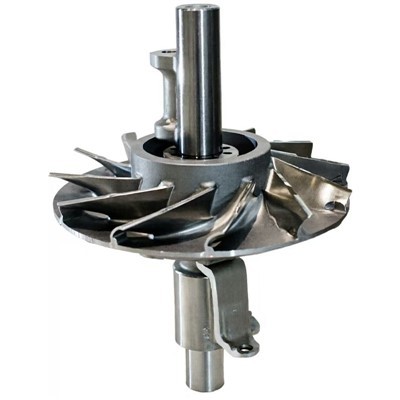
Fan Impeller If you’re in the market for high – quality valve castings and want to learn more about how we ensure the right hardness for your specific needs, don’t hesitate to reach out. We’re always happy to have a chat and discuss your requirements. Let’s work together to find the perfect valve castings for your application.
References
- Callister, W. D., & Rethwisch, D. G. (2017). Materials Science and Engineering: An Introduction. Wiley.
- ASM Handbook, Volume 8: Mechanical Testing and Evaluation. ASM International.
Shandong Shunye Stainless Steel Co., Ltd.
Shandong Shunye Stainless Steel Co., Ltd. is one of the most professional valve castings manufacturers and suppliers in China, also supports customized service. Welcome to buy bulk cheap valve castings made in China here and get quotation from our factory. For price consultation, contact us.
Address: Shandong Province, Binzhou City, Wudi County, Liubao Town, Zhangdong Road, Duliucun Village
E-mail: sales@wdshunye.com
WebSite: https://www.shunyecasting.com/
